

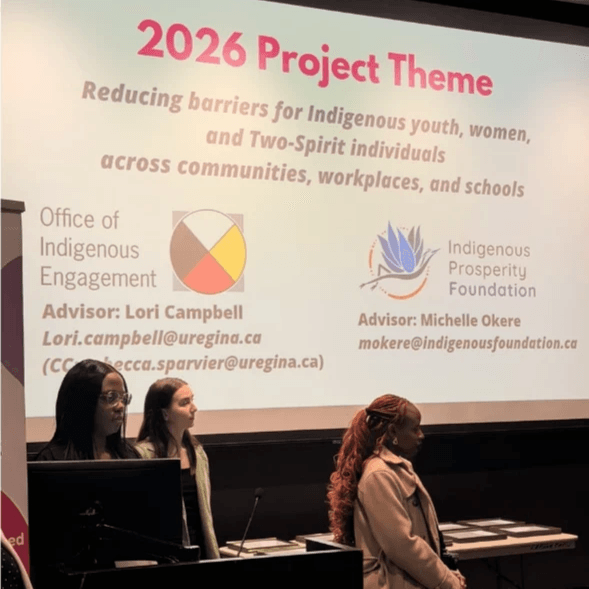
Between January and March, I had the privilege of serving as an Indigenous Advisor for the She’s Here Mentorship Program, a collaboration between RaiseHER Co. and the University of Regina Champions of Change Club, alongside Lori Campbell.
As we recognize Women’s History Month, this experience feels especially meaningful. It was a reminder that while we celebrate the progress and leadership of women who came before us, we also have a responsibility to create pathways for the next generation of Indigenous women and Two-Spirit
leaders to thrive.
This year’s theme, reducing barriers for Indigenous youth, women, and Two-Spirit individuals, reflects a growing recognition that reconciliation must move beyond words and into action, particularly in how we support future leaders.
Why This Was a Natural Fit for IPF
At the Indigenous Prosperity Foundation, our work is grounded in a clear purpose.
We are creating prosperity for Indigenous peoples through a collective spirit of collaboration and empowerment.
We know that this work cannot, and should not, be done in isolation. Advancing Indigenous prosperity requires strong partnerships across education, community, and industry. It requires shared responsibility, values alignment, and a willingness to learn from one another.
That is what made the She’s Here Mentorship Program such a strong fit.
A partnership-based approach to impact
This program brings together academic institutions, community organizations, and professionals to support emerging leaders. This kind of cross-sector collaboration is how meaningful, sustainable change happens and reflects how IPF works nationally.
Shared learning and accountability
Our role was not to lead, but to contribute by bringing an economic empowerment lens while learning alongside participants and partners. This is what respectful collaboration looks like. Multiple perspectives coming together to strengthen outcomes.
Building pathways together
The ideas developed in this program require ecosystems of support to move forward. Partnerships help ensure strong ideas do not sit in isolation and that responsibility for change is shared.
“Advancing Indigenous prosperity requires partnership. No single organization can do this work alone.”
— Michelle Okere, Executive Director.
Why This Work Matters
Across Canada, Indigenous youth, women, and Two-Spirit people continue to face systemic barriers in education, employment, leadership, and access to opportunity.
During Women’s History Month, it is important to acknowledge that Indigenous women have always been leaders, knowledge keepers, and builders of community. Yet today, they remain significantly underrepresented in positions of power and decision-making.
Programs like She’s Here help shift that reality by creating space for emerging leaders to engage directly with these challenges while building the skills and confidence to address them.
This work contributes to advancing several of the Truth and Reconciliation Commission’s Calls to Action, particularly those focused on youth leadership, education, and equitable participation in the workforce.
More importantly, it reflects a deeper shift – mentorship that is intersectional, inclusive, and grounded in justice.
The Role of Indigenous Advisory
As part of my role, I contributed in three key ways:
- Grounding participants in the realities facing Indigenous communities
- Providing feedback and guidance as projects developed
- Identifying pathways for promising ideas to continue beyond the program
This work ensures conversations are informed, respectful, and rooted in lived experience. It also requires honesty.
Reconciliation-focused work must be done with Indigenous communities, not for them.
What I Saw at the Showcase
At the final showcase, I had the opportunity to listen to ten project presentations, each tackling a different barrier impacting Indigenous communities.
Several themes stood out.
Systems, not individuals, create barriers
Participants consistently identified systemic issues such as racism, geography, and income inequality as root causes.
Voice and approach matter
One group shifted their financial literacy project after recognizing the importance of not speaking for Indigenous communities, and instead focused on accessibility and meeting people where they are.
Representation gaps remain significant
Only 0.03 percent of senior leadership roles are held by Indigenous women. This highlights the importance of intentionally creating pathways into leadership.
Intersectionality is complex
Projects demonstrated how overlapping barriers shape lived experiences across
identity, ability, and access.
Strong ideas are ready to grow
Several projects showed real potential to move beyond the showcase with the
right support and partnerships.
“Young Indigenous women and leaders are not waiting for change. They are already building it.”
What This Means for the Work Ahead
One thing is clear. Young leaders are ready.
They are asking better questions.
They are challenging assumptions.
They are willing to sit in discomfort to find better answers.
Our role is to ensure they have pathways to act.
For IPF, that means continuing to invest in mentorship, financial literacy, and entrepreneurship, while partnering with programs like She’s Here that are cultivating leadership earlier in the journey.
RaiseHER Co.
Creating community-led pathways for women and girls to lead boldly at every age and stage.
🔗 Learn more about RaiseHER Co.
Become a Launchpad Mentor with IPF
Support Indigenous entrepreneurs by sharing your experience, strengthening leadership pathways, and helping remove barriers through community-led mentorship.